If you listen to the post-race interviews, you will often hear team principals attribute a win to "instinct" or "the right call at the right time." As someone who spent eight seasons staring at monitors in the back of a pit garage, let me pull back the curtain: there is no such thing as racing instinct. There is only high-frequency data processing and a profound, disciplined respect for probability.
The "game-changing" (a phrase I loathe, as no single metric changes a game that is already in motion) evolution of real-time analytics is not about finding a magic button. It is about narrowing the margin of error in a system where variables shift every time a car crosses the start-finish line. If you think your team is operating on intuition, you aren't looking closely enough at their server rack.
Data Density and the Telemetry Pipeline
Modern endurance racing generates staggering amounts of information. We are moving gigabytes of telemetry from the car to the pit wall every single lap. We track damper pots, brake temps, tire pressures, and engine knock sensors. But here is the sanity check: 90% of this data is noise until it is contextualized.
In a typical LMP2 stint, you aren't just looking at the telemetry; you are looking at the delta between the *predicted* telemetry and the *observed* telemetry. If the car is two degrees hotter than the thermal map predicted, that isn’t a mechanical fault—that’s a loss of aerodynamic efficiency. Research published in Applied Sciences (MDPI) highlights how high-frequency data sampling is essential for predictive maintenance, but in a race, we use that density to identify "state drift."
When the car begins to drift from its predicted baseline, the real work begins. We aren't just checking if things are working; we are checking if they are degrading according to the model.
The Reality of Data Processing
Metric Source Usage Frequency Tire Surface Temp Infrared Sensors Real-time (10Hz) Fuel Mass/Flow Flow Meter Real-time (Continuous) Track Condition Index Grip/Ambient Sensors Rolling Average (1-lap)Probability Over Certainty: The Monte Carlo Principle
One of the most persistent myths in motorsport is that the pit wall knows exactly what will happen in the final 10 minutes of a race. This is mathematically impossible. Racing is a stochastic system—a sequence of events governed by probability, not deterministic fate.
This is where the Monte Carlo principle becomes the backbone of our strategy. Instead of running one "best-case scenario," we run 10,000 simulations every minute. These simulations vary the inputs—a sudden safety car, a 2% variance in tire wear, a botched pit stop for a competitor.
As noted in recent coverage by MIT Technology Review, the application of probabilistic modeling in complex systems allows us to assign a percentage of success to every potential decision. If we pit now, we have a 68% chance of net-position gain. If we stay out, the probability drops to 42%. We aren't choosing "the best strategy"; we are choosing the one with the highest expected value given the current uncertainty.
Let’s run a quick back-of-the-envelope calculation. If you are trailing by 5 seconds with 20 minutes left, and the leader is pitting, the "instinct" move is to stay out. But if the Monte Carlo distribution shows that the probability of rain increases by 15% every lap, the math dictates an early pit for a safety buffer. Ignoring the math for a "gut feeling" is how races are lost in the final three corners.
Decision Support on the Pit Wall
It is important to clarify that analytics are only as good as the decision support framework built around them. Tools like those discussed in various MrQ industry analyses focus on the intersection of human psychology and data availability. The goal isn't to replace the strategist with an AI; the goal is to provide the strategist with a manageable range of outcomes.
When the pressure mounts, humans tend to suffer from confirmation bias. We want to believe our car is faster than it is. Real-time analytics acts as the circuit breaker for that bias. It forces us to acknowledge that the probability of our current tire compound holding up for 15 more laps is near zero, regardless of what the driver says on the radio.
This is where telemetry processing must be lightning-fast. If the system takes two minutes to calculate a potential strategy shift, the race has already moved on. We need these insights in sub-second intervals to make effective calls on fuel saving or defending against a faster car.
The Human Element: Why Models Fail
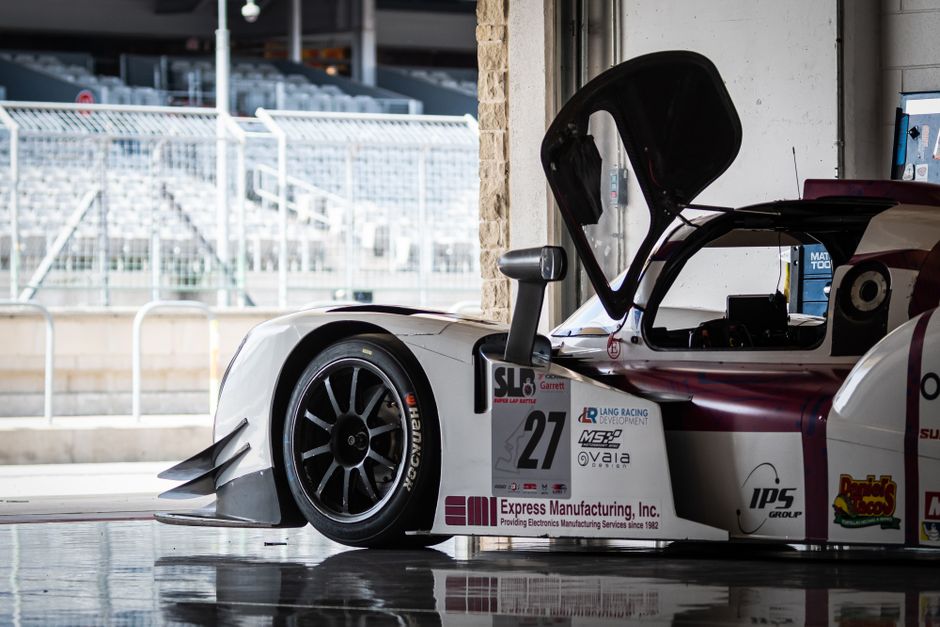
I often hear fans ask why, if we have such advanced tools, we still see tactical blunders. The answer lies in the limitation of models. A model is a simplified representation of the world. It cannot account for the fact that a driver might be struggling with a specific kerb, or that a backmarker might act erratically due to a broken radio.
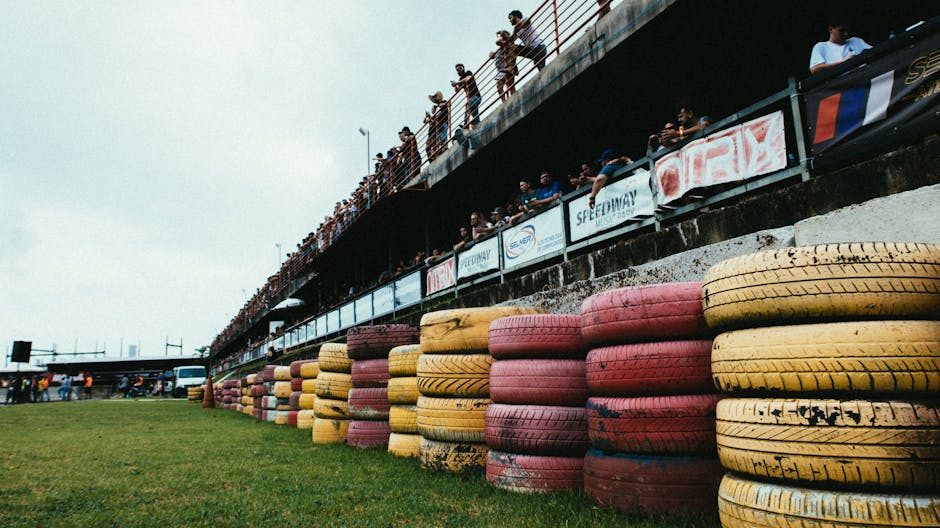
Comparing a digital model to the "chaotic reality" of a race track is a partial comparison. The model assumes a rational world. A race track, by definition, is an environment filled with irrational actors—other drivers, marshals, and changing weather patterns. We use the data to create a probability space, but the human strategist is the one who chooses which point in that space to inhabit.
It is easy to overstate our certainty. I have seen engineers insist that a car *will* finish on the podium based on their projections, only to have a sensor fail three laps from home. Analytics provides the framework, but physics provides the final verdict. Always approach these systems with a healthy dose of skepticism.
Conclusion: The Strategy of Uncertainty
So, what does real-time analytics actually do during a stint? It translates the chaos of the race track into a navigable set of risks. It allows us to manage our fuel, anticipate tire degradation, and respond to the unpredictable actions of our competitors with something more reliable than a hunch.
We are not predicting the future. We are quantifying the present. By utilizing the Monte Carlo principle to map potential futures, we move away from the "instinct" narrative and into the realm of rigorous risk management. Next time you racingsportscars see a strategist staring intensely at a screen while the car is flying down the Mulsanne Straight, don’t assume they are waiting for a revelation. They are watching a simulation engine churn through thousands of possibilities, trying to ensure that when the checkered flag falls, we are standing on the side of the highest probability.
Racing is rarely won by the person who knows the most. It is won by the person who best manages the uncertainty that remains after the data has been exhausted.